
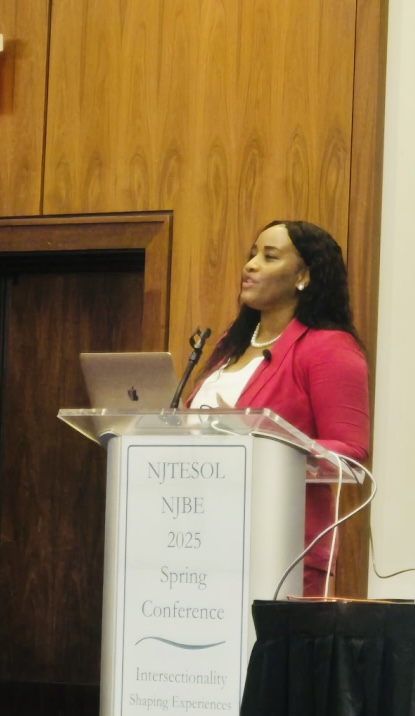
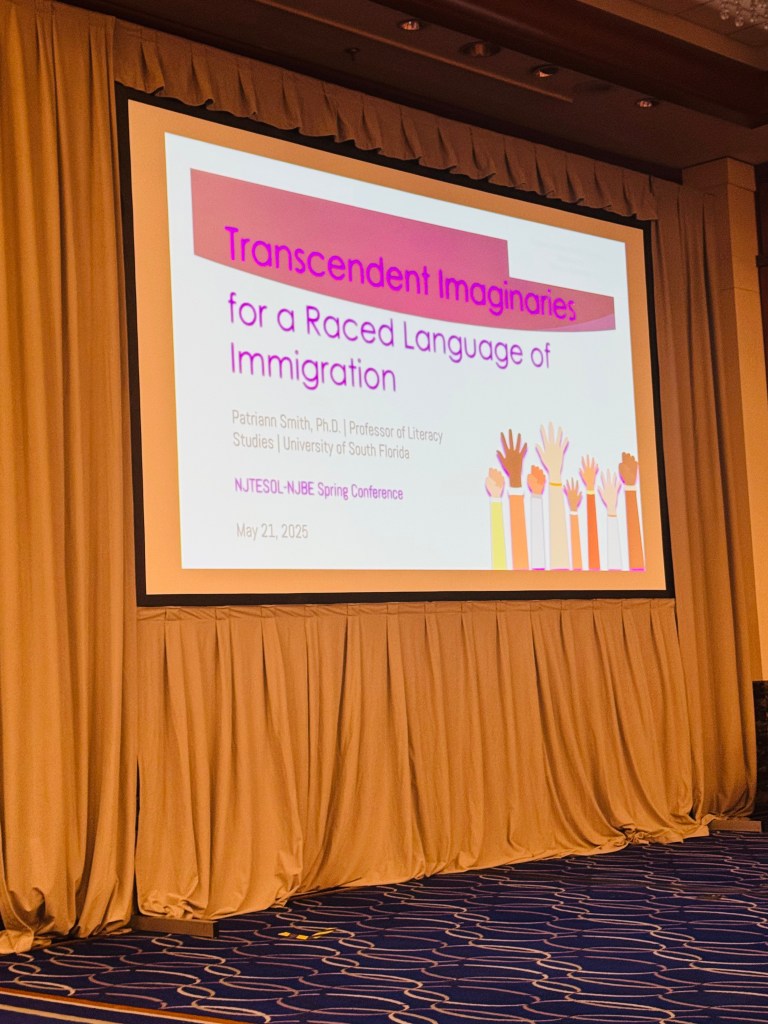
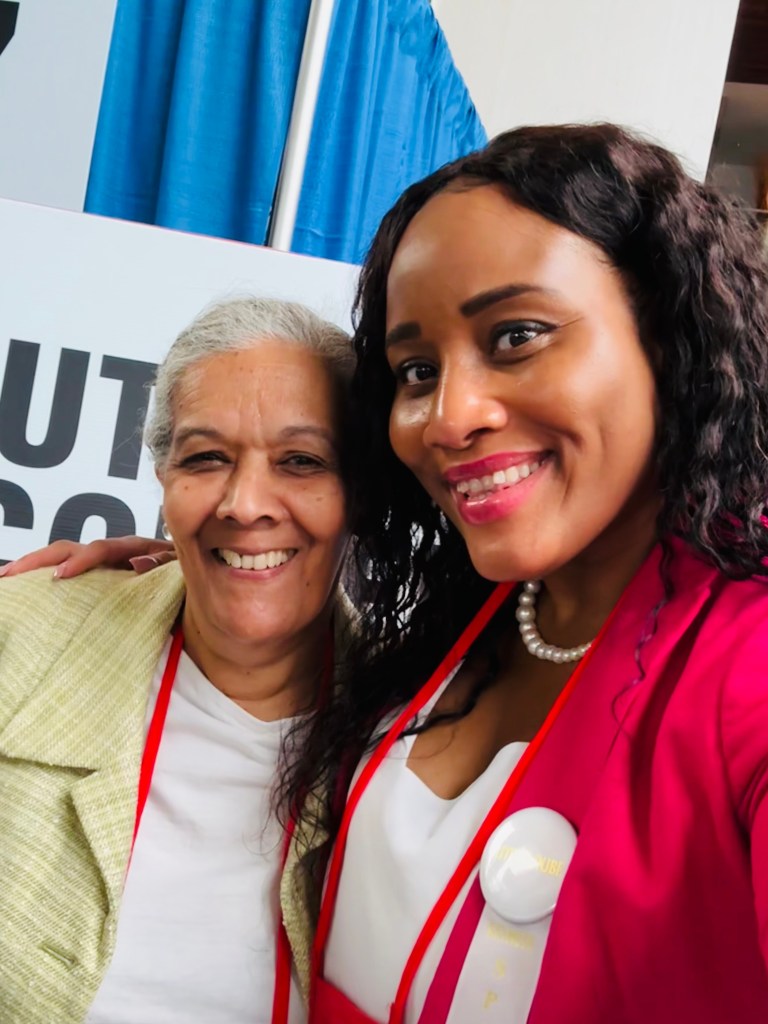
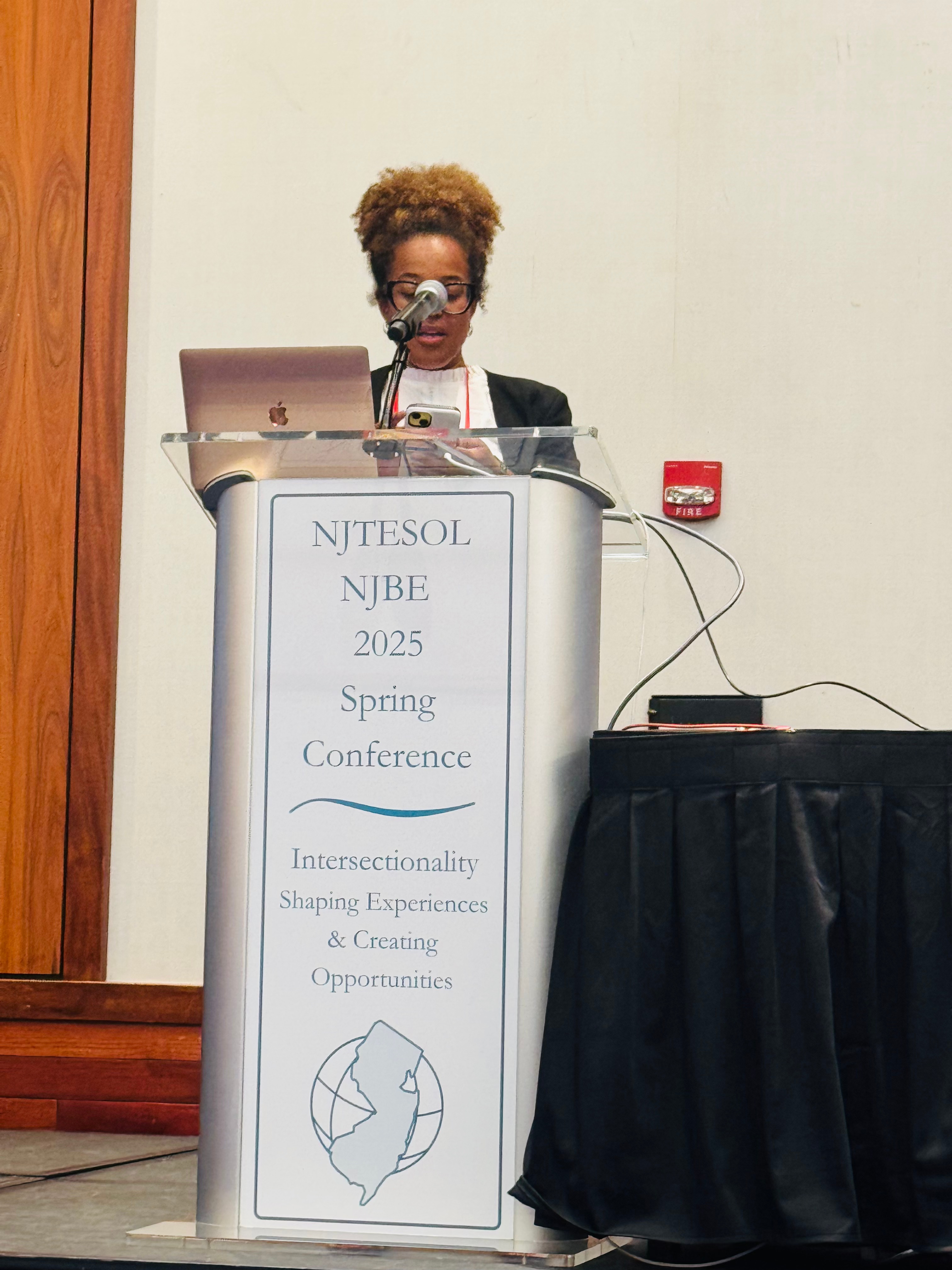
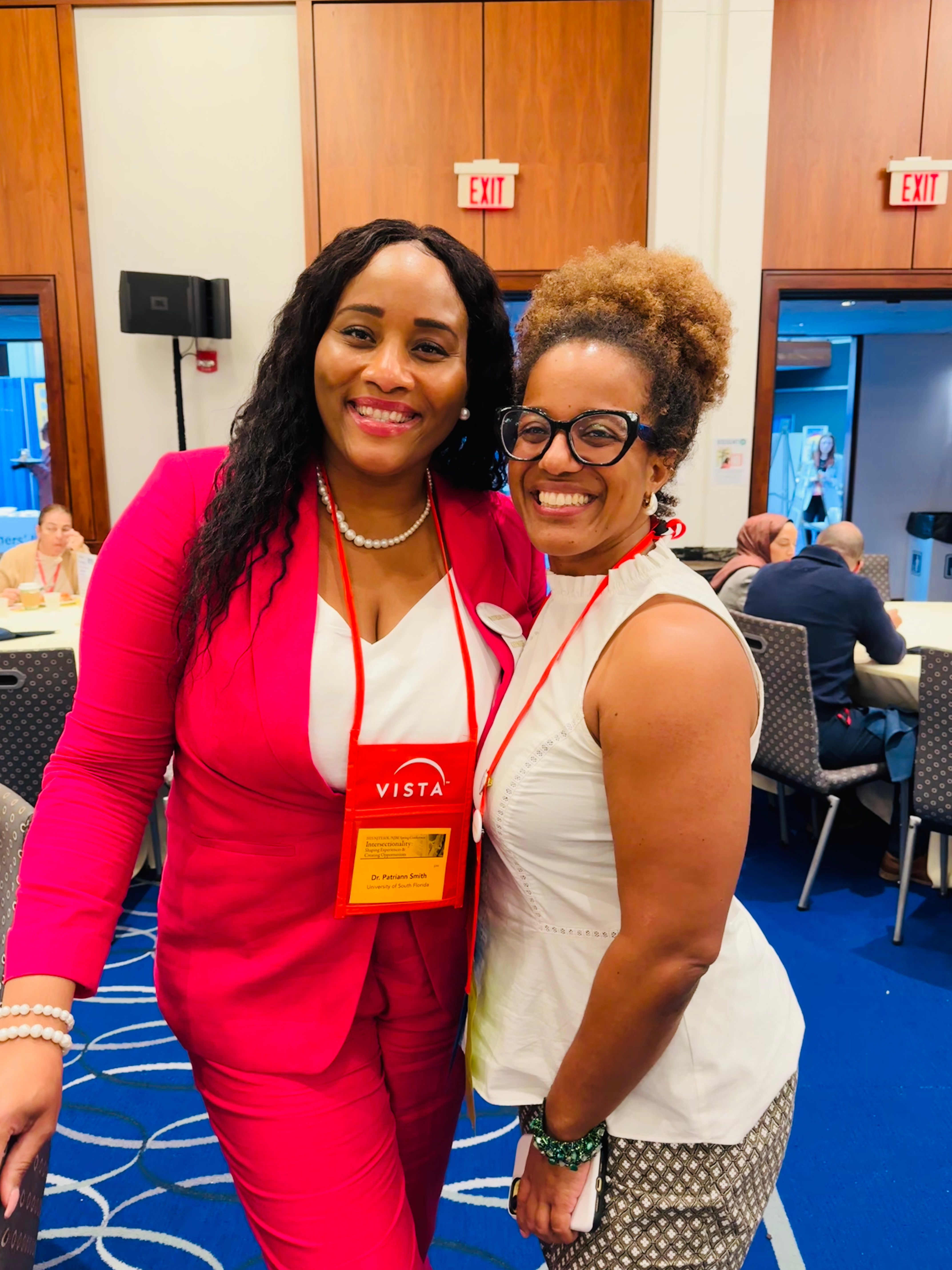
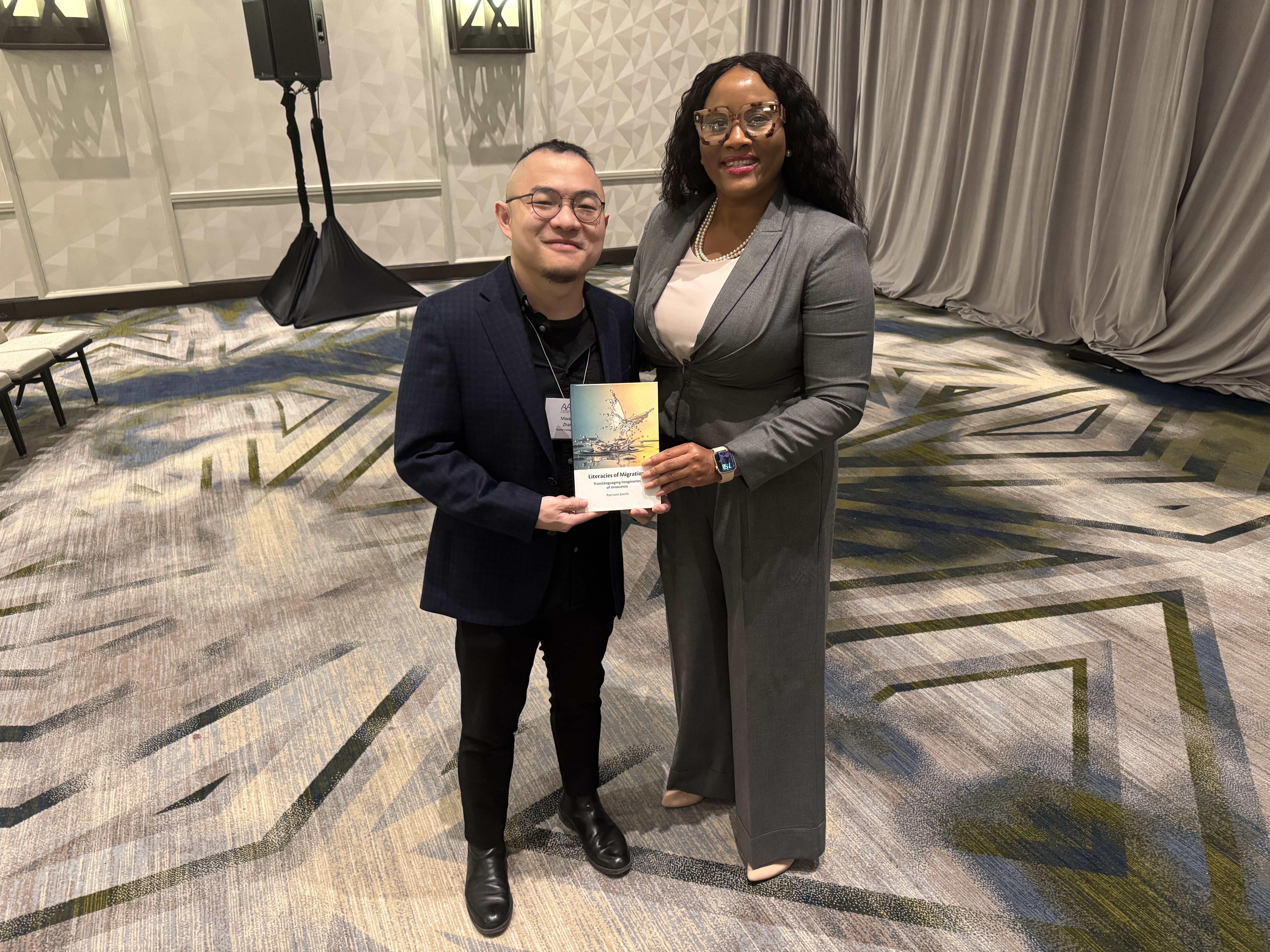
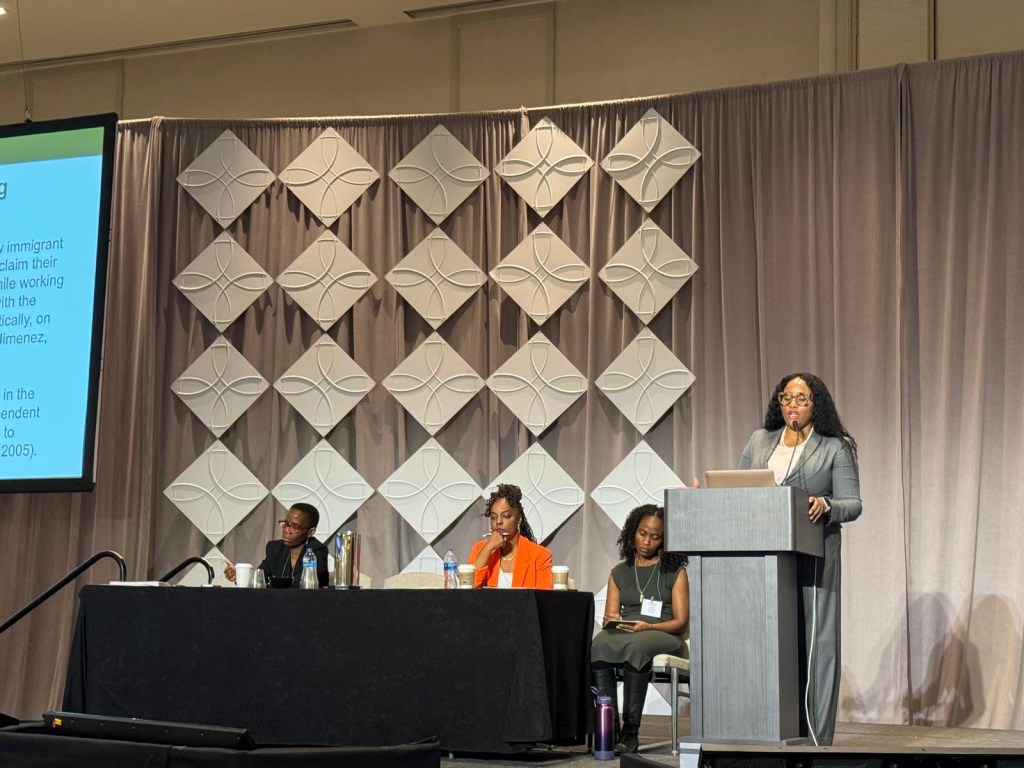
On Wednesday, May 21, 2025, after spending some time this past spring in community with fellow scholars at the annual meetings of the Modern Language Association (MLA), the American Association for Applied Linguistics (AAAL), and the American Educational Research Association (AERA), I was thrilled to serve as the keynote speaker for the NJTESOL-NJBE conference, held at the Hyatt Regency Hotel, New Brunswick, New Jersey — a conference with the timely theme, “Intersectionality: Shaping Experiences and Creating Opportunities.” As I usually do before I enter into community with my fellow humans in a new space — whether physically or symbolically — I spent some time researching the rich history of Newark and of New Jersey. And given my Saint Lucian immigrant background (explored in my Black Immigrant Literacies YouTube Playlist here) and an often-lack of familiarity with some of the key historical tenets of what defines my Americanness as a Caribbean but also US experience, I found the contextual underpinnings surrounding New Jersey to be quite fascinating.
“Island of Hope, Island of Tears”
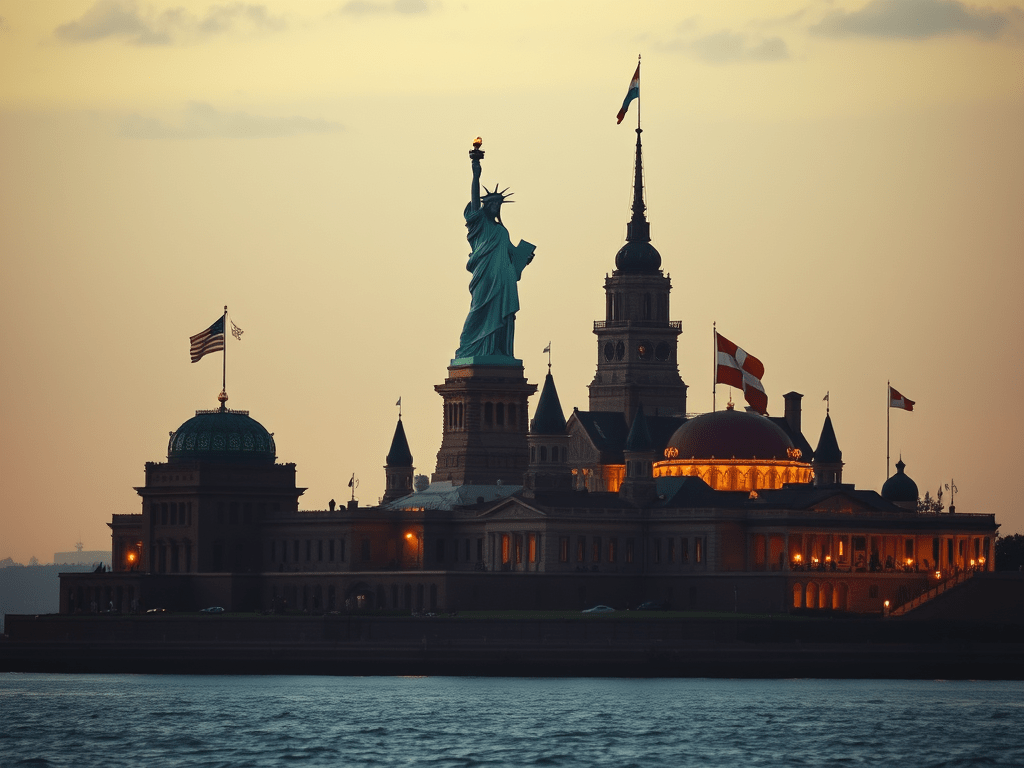
One of the key elements that caught my attention during the course of my research, particularly considering the title of my keynote, “Transcendent Imaginaries for a Raced Language of Immigration,“ was the historical enigma of Ellis Island. This legendary yet now almost obscure gateway to the United States for over 12 million immigrants during the period 1891 to 1954, many of whom were racialized as white, and who, as the Library of Congress observes, were processed “at a rate of up to 5,000 people a day,” continues to sit silently in the shadow of the 1885 French-donated Statue of Liberty — the powerful harbinger of a then, and perhaps as vividly as it remains now, selective American dream.
So I imagine you must be wondering — what did my fascination with the unsilenced invisibilities surrounding this legendary Ellis Island that functioned as a historical immigration gateway for ancestors of over 40% of the current US population reveal? And what does this have to do with my keynote?
1. Racialized Processing of Immigrants at Ellis Island
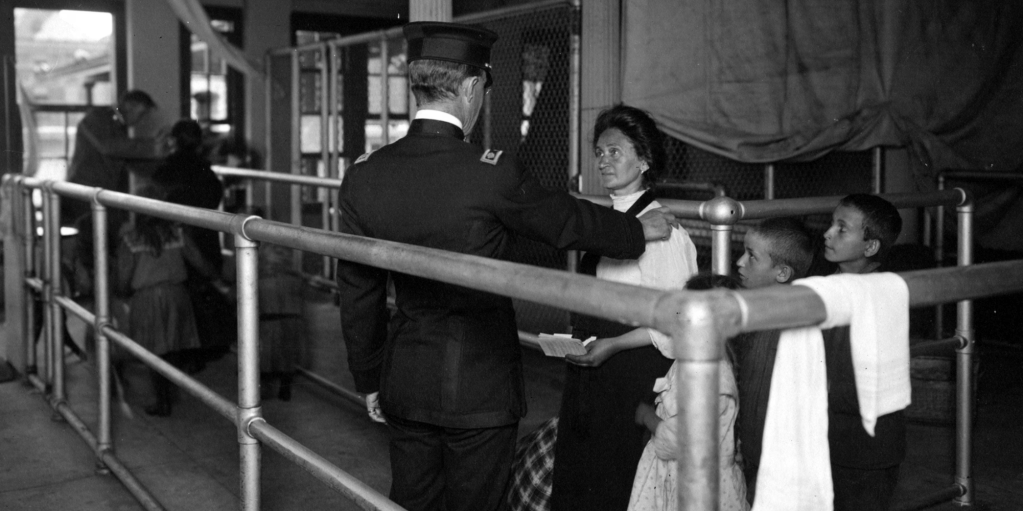
According to Facing History & Ourselves,“Immigrants’ Experience at Ellis Island 1892-1921”, humans who arrived at Ellis island as early as 1892 when this was determined to be necessary due to the increasing influx of immigrants, were expected to: (a) have medical examinations referred to as “six-second physicals,” given the name because of the six-second glance on which they were based; and (b) be interviewed by an immigration inspector about their identity with questions ranging from a focus on race and physical health to the amount of money possessed. The National Park Service states that the six-second physicals appeared to be focused on contagious diseases such as trachoma, tuberculosis, diphtheria, as well as indications of poor physique, pregnancy and mental disability.
And the Ellis Island Immigration Museum notes that an immigrant who would have arrived at Ellis Island in 1910 might have been asked questions such as the following by the then Board of Special Inquiry:
1. What is your manifest number (from your ship)? 2. What is your full name?
3. How old are you?
4. Are you male or female?
5. Are you married, single, widowed, or divorced?
6. What is your occupation?
7. Are you able to read and write? (yes or no)
8. What country are you from?
9. What is your race? (note: no question was asked about religion)
10. What was your last permanent place of residence? (city and country)
11. What is the name and US address of a relative from your native country?
12. What is your final destination in America? (city and state)
13. Your number on the immigration list?
14. Do you have a ticket to your final destination? (yes or no)
15. Who paid for your passage?
16. How much money do you have? (at least the equivalent of $50 dollars was needed)
17. Have you been to America before? If so when, where and how long?
18. Are you meeting a relative here in America? If so, who and their address?
19. Have you been in a prison, charity almshouse, or insane asylum?
20. Are you a polygamist? (Yes or No)
21. Are you an anarchist? (a real anarchist would have been a fool to say yes)
22. Are you coming to America for a job? What and where will you work?
23. What is the condition of your health?
24. Are you deformed or crippled?
25. How tall are you?
26. What is your skin color?
27. What color are your eyes and hair? (much like on today’s driver’s license)
28. Do you have any identifying marks? (scars, birthmarks, or tattoos)
29. Where were you born? (city and country)
2. Europeans — White Immigrants — the Primary Arrivals at Ellis Island
History confirms that “in 1907, no passports or visas were needed to enter the United States through Ellis Island. In fact, no papers were required at all.” It is well established that “more than 12 million immigrants passed through Ellis Island between 1892 and 1954—with a whopping 1,004,756 entering the United States in 1907 alone, its busiest year.” And in fact, as historian and librarian, Barry Moreno, at the Ellis Island Immigration Museum, confirms, “This was a paperless period. All you had to do was verbally give information to the official when you boarded ship in Europe and that information was the only information used when they arrived.”
It was no wonder that the 1880s saw approximately 300,000 immigrants arrive at Ellis Island, followed by 600,000 in the 1890s and over 2 million in the decade that followed. Indeed, and as also confirmed by Barry Moreno, by the year 1920 and at around the time when the curbing of immigration became more pronounced (see discussion down below), the US had received over 4 million Italian immigrants — a representation of over 10% of its foreign-born population. Overall, a total of 12 million immigrants were documented as having arrived to the United States.
Vincent Cannato, Associate Professor of history at the University of Massachusetts, Boston, and author of American Passage: The History of Ellis Island, confirms that one of the reasons for the arrival of so many immigrants was the then attraction of the US economy — an economy which, it must be acknowledged was then only considered “strong” because of the involuntary labor of centuries of enslavement of peoples racialized as Black and forced from their homelands in Africa to the Central Americas (e.g., Caribbean, Brazil) as well as the Northern Americas (e.g., U.S.). Others observe that poverty and persecution — religious and otherwise — in the home countries of these immigrants were additional reasons for this influx.
For a large majority (about 80%), upon arriving to Ellis island, only a few hours were required to be processed as an immigrant, creating the label, “Island of Hope.” For others, days, weeks, months, and even years were spent languishing at the Island’s unstately halls. And there were those (10%) who were ultimately denied entry and deported. Hence the unequally applied label, “Island of Tears’. Immigrants denied were usually said to have met this fate because they were deemed to have a contagious disease; others because they were determined likely to become dependent — a charge of the government. The select stories of immigrant families traversing Ellis Island almost a century ago, many of whom, as depicted, and as observed earlier, were racialized as white, provide snippets into the intricacies of their lives as they pursued a then ‘American dream.’

That notwithstanding, it must be acknowledged that alongside the majority white immigrant population arriving at Ellis Island, were Black immigrants, many of whom came from the Caribbean.
3. Immigration Legislation Racialization Surrounding Decisions at Ellis Island
Having provided this backdrop, let’s return to my keynote, premised on the esteemed Panamian American Yale University Professor Roy Simon Bryce-Laporte’s notion of the Black immigrant as a prism for understanding race relations in the United States. With the observations presented thus far, one can easily understand my fascination with Ellis Island in pursuit of a just understanding of the historical context surrounding the racialization of immigrants and its positioning in this often-distorted racial milieu. To be clear, overall, and as the history books show, Ellis Island functioned predominantly as a place for processing immigrants racialized as white — that is, European immigrants — with Italy being the most popular location of origin for the majority of immigrants. Having such an understanding of the history of Ellis Island and the immigrants who were processed there, it became clear, as I reviewed the legislative timeline regarding the ways in which immigration policies have been used throughout US history as a basis for curtailing the influx of immigrants racialized as people of Color, how the Island operated within the broader legislative context of the US.
A Visible Timeline of Racialized Immigrant Legislation
Historically, a curtailing of the influx of immigrants to the US along racial lines is largely acknowledged, visible for instance, in: (a) the Naturalization Act of 1790, which limited US citizenship to white immigrants; (b) the Immigration Act of 1917, which barred people from British India, most of Southeast Asia, and most of the Middle East from migrating to the US; (c) the Emergency Quota Act of 1921, which used a quota system based on nationality to overwhelmingly favor immigrants from Western Europe and exclude most immigrants from Asia and Africa; and (d) the Immigration and Nationality Act of 1952, which was a revision of the quota-based system and allowed Asians to migrate legally to the US for the first time despite its continued discrimination against them (Migration Policy Institute, 2013; United States of America Department of State, 2024).
Here, considering the surrounding US legislation based on which Ellis Island operated and within which it was encrouched, it becomes clear why this legendary gateway for immigrants to the US between 1892 and 1954 — may have inadvertently functioned as primarily receptive to an overwhelming number of immigrants racialized as white, and thus, as the recipient of a minimal number of immigrants racialized as people of Color. But this would soon change.
Jim Crow and the Disruption to Racialized Immigrant Legislation
Not too long after the closure of Ellis Island, and following the civil rights movement that resulted in the dismantlement of “Jim Crow,” the Civil Rights Act of 1964, and the Voting Rights Act of 1965, America would see a major disruption in the long-standing race-based immigration quota system signaled by the passing of the Immigration and Nationality Act of 1965. Commonly known as the Hart–Celler Act, this was named after Senator Philip A. Hart of Michigan and Representative Emanuel Celler of New York. The act gave priority to refugees, people with special skills, and those with family members living in the US and banned discrimination-issuing immigrant visas based on “race, sex, nationality, place of birth, or place of residence,” with several major exceptions (FitzGerald & Cook-Martín, 2015). This meant an increase representing a significant shift in foreign Blacks as compared to all Blacks in America from 1 to 8 percent (Kent, 2007), with Jamaicans and Haitians most largely represented from the Caribbean, and Ethiopians were most largely represented from Africa. The passing of the Hart-Celler Act saw the foreign-born black population rise nearly seven-fold between 1960 and 1980, and more than triple between 1980 and 2005 (Kent, 2007).
Following this Act, several additional immigration laws instituted in the decades that followed continued to facilitate a significant increase in the migration of Black immigrants to the US: (a) the Immigration and Nationality Act Amendments of October 20, 1976, which “made it easier for foreigners to obtain visas to study, reunite with family, or market their skills”; (b) The Refugee Act of March 17, 1980, which “fundamentally changed U.S. refugee policy to conform to UN protocol on refugees and provided for 500,000 visas annually,” allowing for influx of refugees from countries with international and civil unrest such as Somalia, Ethiopia and Eritrea, Cuba and Haiti; (c) the 1986 Immigration Reform and Control Act (IRCA), which allowed “undocumented immigrants living in the United States to apply for legal status”; and the (d) 1990 Immigration Act, which “increased the number of immigrants admitted on the basis of skills for U.S. jobs,” introducing the “diversity visa lottery to admit immigrants from countries not well-represented among the U.S. immigrant population” (Kent, 2007, p. 6).
It is no surprise then that as of 2019, one-in-ten Black people in the US are immigrants (i.e., first-generation/foreign-born) and a significant part of the Black American population have been identified as having recent immigrant connections such that “they were born in the U.S. and have at least one foreign-born parent.” It is also no surprise that Black immigrants now account for one in ten Black persons in America with the Black immigrant population expected to “account for roughly a third of the U.S. Black population’s growth through 2060.”
So What Now? What do these Ellis Island Explorations Mean for the Current Moment and for the Impasse that continues to Characterize Decisions Surrounding Immigration?
If one considers the legendary Ellis Island, not just as a living instantiation, but also, as a historical symbol of selective immigration and thus, the representation of a deferred dreaming for some and a denied dreaming for others, it becomes easy to understand how enshrined national legislation has, by its very design, consistently worked intentionally, to indelibly curtail the movement of certain masses while functioning as a beacon of hope for huddled others. Even in the opening of doors to immigrants racialized as people of Color, we see specifications imposed that allow for certain classes of people, while at the same time, the insistence on a denial of others based on mechanisms such as ‘literacy tests’. In turn, it becomes almost too easy to see why long-standing claims regarding a feigned freedom granted to immigrants seeking refuge in these sacred Native American lands remain challenged, threatened now by a truth that provokes our ultimate reckoning with reality.
This reality of a selective American dream which dares to give pause to the long-dormant consciousness of our reluctant yet resilient humanity, invokes a remembrance of the bloodied historical cost at which asserting our (immigrant/ness) (American/ness) has now come – a cost which, born by our enslaved African ancestors racialized as Black, across the Caribbean, Latin America, and in these United States — saw 12 million immigrants, the majority of whom were white, pass through the Ellis Island immigration station during its six decades of operation even as the horrific practice of slavery had not too long before, worked to decimate an almost equal number of Black peoples forced from Africa to the Americas.
Today, with an estimated 40% of the United States population (over 100 million people) descended from these approximately 12 million immigrants who passed through Ellis Island, so many of whom, much like millions of others, appear to be touted as economically wealthy largely due to the historic enslavement of Africans, there is every reason, in this moment, that the Americas and by extension the world, should now stand awakened, jolted by this long-overdue resurrection of the morally unified transnational consciousness, aroused now from its slumber of silenced indignation.
Alas, the quantum ancestral possibilities, imbued yet lying dormant for generations, now beckon, functioning as a remote reminder that our redemptive restitution rests only in our power to harness the shared transnational humanity that binds us — Native peoples to immigrants; immigrant racialized as Black to immigrant racialized as white; descendant of the enslaved to (descendant of) the immigrant; (descendant of the) immigrant to descendant of the slave master; descendant of the enslaved to descendant of the slave master — a restitution bound to be birthed through the silencing of an imagined peace. United now, those echoes of the voices of our immigrant ancestors — Black, brown, and white alike — blending with the unsung histories of our First Peoples and of our African ancestors enslaved, will continue to ring, imploring the right to a freedom that makes visible an unjust peace, through the subtle beckoning that invites us back to Ellis Island for such a time as this.







 Patriann Smith, Ph.D.
Leave a comment