As Associate Dean and Professor in the United States with humble beginnings in my homeland Saint Lucia — a tiny Caribbean island country that birthed two Nobel Laureates and the world’s fastest woman, Olympic Champion Julien Alfred — I serve as an immigrant and transnational scholar-mother-educator racialized as Black.
Over the past two decades, I have developed scientific expertise in literacy based on my role as a former English language arts (ELA) teacher in the Caribbean and my experience as a reading/literacy scholar and educator in and beyond the United States. My scientifically-informed scholarship is based on studies of Caribbean peoples, many of whom are students, teachers, and educators functioning as Black immigrants in the US and others of which are residents of their home countries in the ‘West Indies’.
Insufficiently Standard
As a small island St. Lucian girl turned Caribbean mother-teacher and then American scholar-educator entrusted with the sacred task of functioning as Vice President for an organization that I call home (i.e., LRA), it was not too long ago that I was devastated when I was told I could not pursue doctoral study in the field of linguistics. It was said that I did not speak a “standard language” (i.e., what we think of as French, Spanish, English) in addition to ‘English’. Somehow, my St. Lucian French Creole and St. Lucian English Vernacular were deemed not ‘standard enough’ to qualify as a basis for examining language as a scholarly pursuit by many universities in the United States.
What I did not know then as I describe in the Critical Conversations video with Dr. Tasha Austin, “De-Essentializing Linguistic Blackness and Black Diasporic Possibilities” and in the Multicultural Classroom podcast, “Black Literacies” with Roberto Germán was that race, language, and immigration intersect to create perceptions about whose language matters, which language matters, and which race is allowed to legitimately study language legitimately in and beyond the US academy and beyond. In turn, literacies are deemed inferior or acceptable depending on how closely they align with or deviate from certain norms.
Reinscribing Legitimacy
Today, my pathway via a doctoral degree in literacy has nonetheless led me to my destiny. As a Saint Lucian American scholar who works daily to bridge languages and literacies in research and practice, a process that I describe in the Shifting Linguistic Landscapes voicEd Podcast produced with Dr. Rahat Zaidi, I dismantle those hegemonies that I saw in the village of Mon-Repos growing up as a child. There, immersed in a mosaic of linguistic dexterity, I was constantly aware of the juxtapositioning of languages that caused certain speakers to emerge as ‘better’, as more ‘proper’, as ‘legitimate’, and of the capacity of literacy for inflicting violence even as it opened up vivid imaginaries that allowed me to dream beyond Caribbean shores.
Black Immigrant Literacies as a Lens & Prism
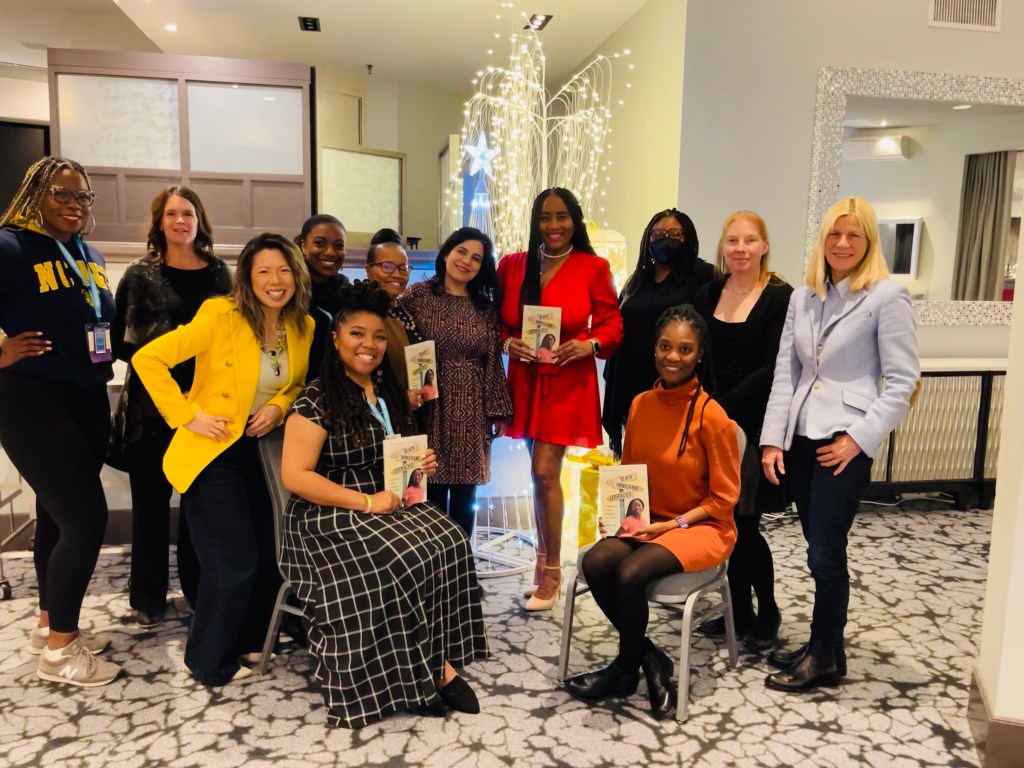
Now, fueled by God’s Spirit and propelled by what looks like success but feels like a lifetime of pain in the US academy — pain informed by racism, linguicism, and xenophobia — I use Black Immigrant Literacies as a lens and as a prism in my scholarship to show that undergirding dichotomies in languaging and literacy are hegemonies that have for a very long time, tended to position the multilingualism and thus literacies of millions of certain students as “broken,” “dialectal”, as “less than” and as “inferior” while touting that of others as “proper”, “legitimate” and “perfect”.
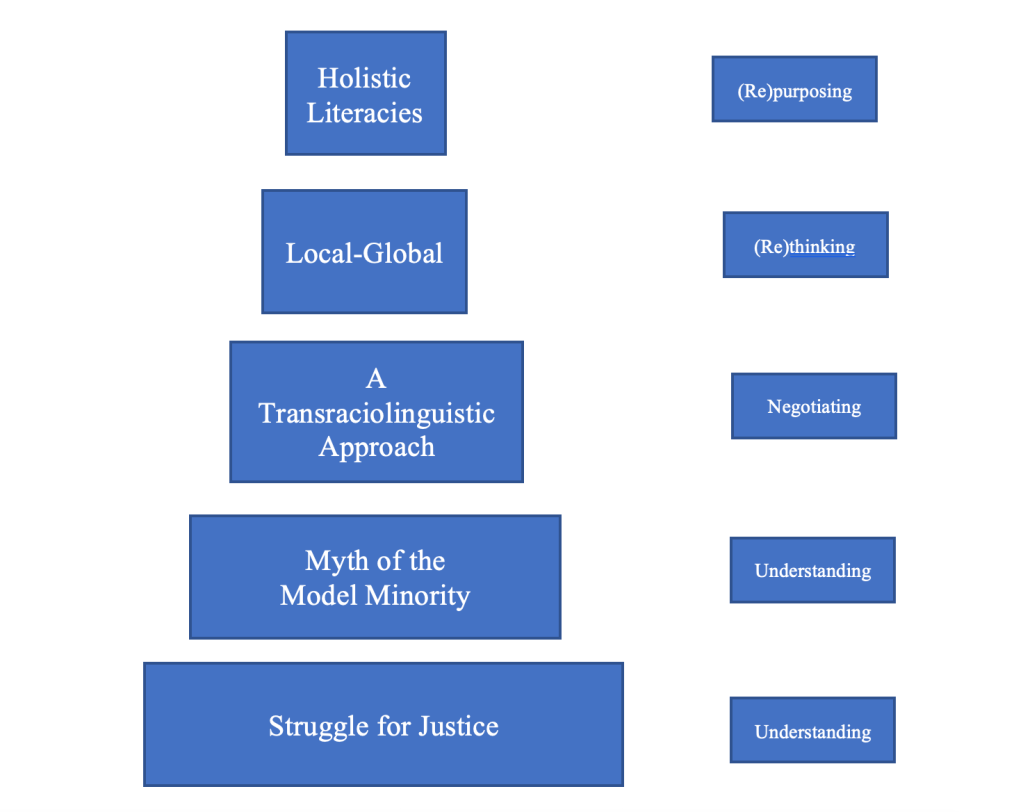
It is this very notion that served as the basis for the erasure of the personhoods of millions of children and families during slavery and it is the same notion that now fuels the recurring polarity, backlash, divisiveness, and hatred — all of which are leveraged primarily through literacies used by humans in the world today. Alas, in the same way that literacy functions as a vehicle for hope and peace it can also function as the basis for destructiveness, particularly when touted as neutral and as a panacea with undue regard for its capacity to do harm.
A Transraciolinguistic Approach for Just Presents & Futures
Informed by the Black radical tradition as outlined in my co-authored book, “Affirming Black Students’ Lives and Literacies: Bearing Witness,” my research on “transraciolinguistics” is based on my extensive scientific examination of Black Immigrant Literacies in the lives of teachers, students, and educators both in the US and the Caribbean. I use “a transraciolinguistic approach” to respond to the challenge above which often dichotomously positions millions on the periphery of schools, society, and institutions at large.
Transraciolinguistics, emerging from critical literacy as envisioned by Dr. Allan Luke and critical applied linguistics as envisioned by Dr. Alistair Pennycook, extends the scholarship on raciolinguistics of Drs. H. Samy Alim, John Rickford, and Aretha Ball, and the research on “a raciolinguistic perspective” by Drs. Jonathan Rosa and Nelson Flores. Inspired by the call for culturally relevant and culturally sustaining pedagogical pathways as articulated by Drs. Gloria Ladson-Billings, H. Samy Alim, and Django Paris, transraciolinguistics focuses on developing relational mechanisms for literacy and education at large, ultimately geared towards building solidarity between peoples racialized as Black and of Color and those racialized as white.
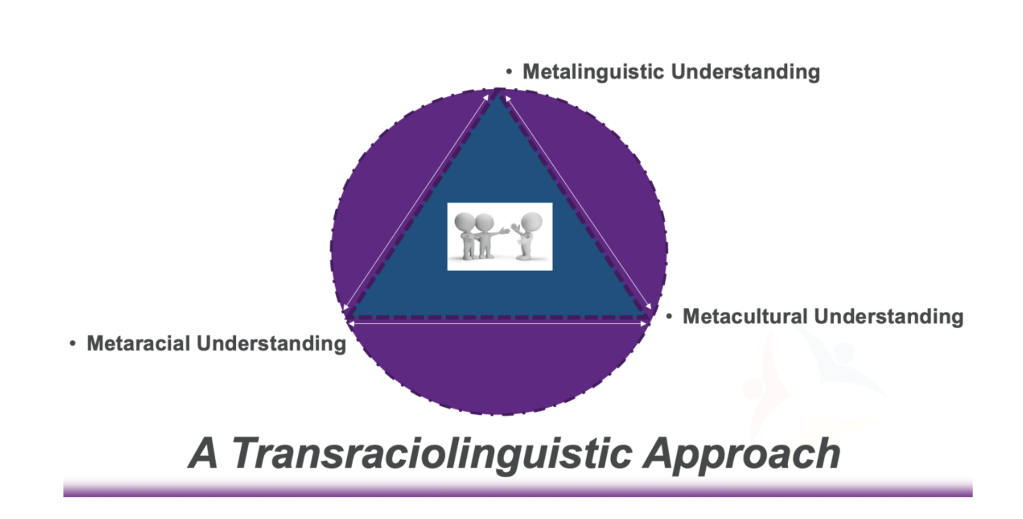
At its core, a transraciolinguistic approach is intersectionally informed by transnational literacy from the research of Dr. Allison Skerrett, racial literacy from the research of Dr. Yolanda Sealey-Ruiz, and diaspora literacy from the research of Dr. Joyce King.
I use a transraciolinguistic approach to advocate for the multilingualism of populations whose race, language, and migration serve as an asset based on how they ‘do literacy’ even as they are positioned by institutions and the society at large as deficient, foreign, inferior, or as individuals whose knowledges and intelligences are needed but whose personhoods are not.
A Gracious Invitation to Solidarity
With love and grace yet an unwavering and unapologetically firm stance, rooted in my God-given Saint Lucian American Blackness, I urgently implore those who research, teach, and create policies around language and literacy to extend beyond “functional literacy” and a definition of “success” determined by mainstream English norms as a basis for thinking about the assets of Majority World peoples, and by extension, all humans.
I invite us to consider also, the literacies that Majority World peoples already possess (see Dr. Vaughn Watson) and that are constantly erased through institutional systems which serve as colonial extensions of slavery. I urge all to centralize the criticality of literacy in our efforts to fully consider what I refer to as the “holistic literacies” of Black immigrants, and by extension, Black and all peoples. The field of literacy at large stands to benefit from harnessing the possibilities of transraciolingusitics for imagined presents and futures.
Silencing Invisibility
The opportunity through my professional mission to silence the invisibility of Black immigrants and to share the message of hope through literacy, continues to be a reflection of God’s divine inspiration upon my life and in the lives of so many who have so vehemently insisted on restoring the long-held literate humanity of all peoples across the globe.
For us, redemptive destiny is all.
 Patriann Smith, Ph.D.