Innovations
Researcher, Team Leader, Collaborator, Change Agent
oVERVIEW
As a Saint Lucian American Professor working in the contested transgeographic educational terrain and the broader sociopolitical landscape across which literacies are enacted, I adopt a transdisciplinary lens to position Black immigrant literacies and Englishes for transraciolinguistically advancing just solutions in literacy practice. I pursue these goals via three interrelated research strands.

RESEARCH STRAND I
Black immigrant literacies as lens and as a lens for transraciolinguistically just approaches to literacy research and as a prism for re-envisioning literacy and language as multilingual, multicultural, and multiracial.
There is a continued need in the field to clarify how race and language intersect in the cultural experiences of Black immigrants as they use Englishes and literacies while migrating from cultural and linguistic contexts of their countries of origin to the distinct racialized, cultural, and linguistic milieu of the United States. There is also a need to position the lens of Black immigrant literacies as a necessary prism for disrupting normative practices that are often only based on Eurocentric norms by equally focusing on country of origin and country of destination.
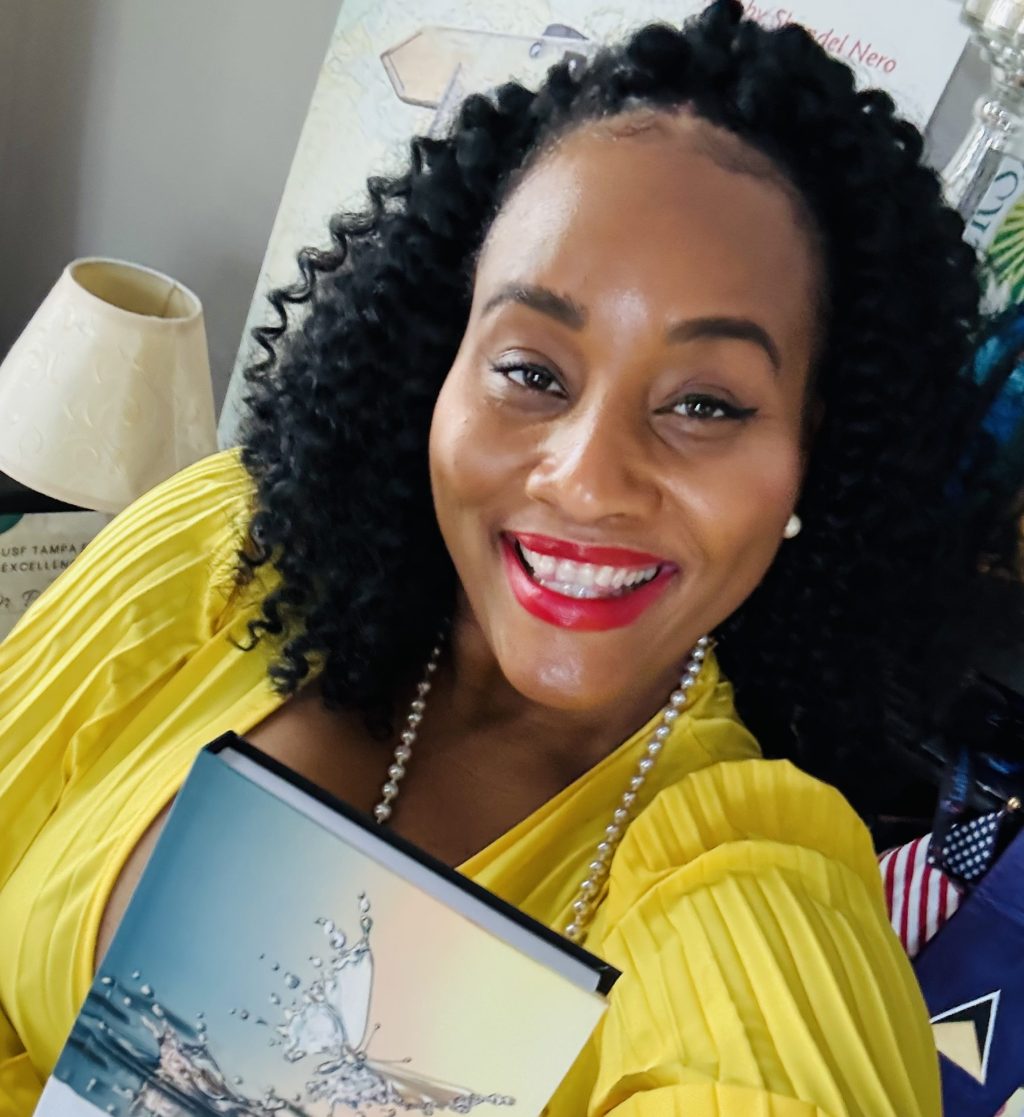
Addressing this need through numerous refereed works and recently, through my book available for pre-order with Teachers College Press, and titled, “Black Immigrant Literacies: Intersections of Race, Language and Culture in the Classroom,” invites the fields of language and literacy to consider how teachers across United States classrooms can be prepared to teach English language arts and literacy using the Black immigrant lens and with the Black immigrant student in mind. Drawing from the previously published “Black immigrant literacies” framework (Smith, 2020), this book, published on November 24, 2023, makes visible the ways in which Black immigrant students from the Caribbean navigate tensions in the United States. The book presents mechanisms for enabling them to engage in solidarity with African American peers and successfully with White students as well as other students of Color.
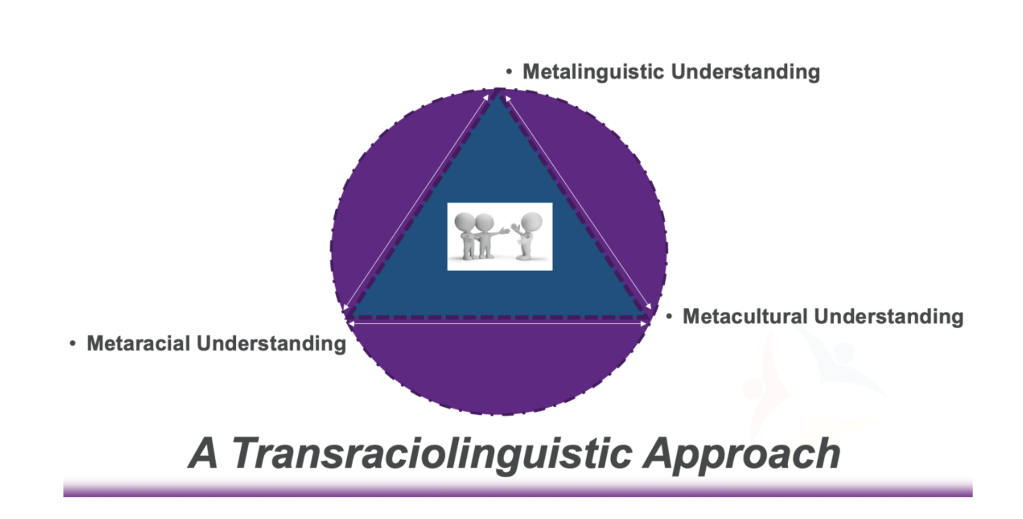
Specifically, this book: (a) details how teachers, curriculum, and instruction can benefit from understanding the experiences of Black immigrant students, and how that experience differs from that of other Black American students; (b) highlights authentic narratives that center the holistic voices of Afro-Caribbean immigrant youth from Jamaica and the Bahamas; (c) demonstrates how students grapple with racialization, becoming immigrants, and the responses of others to their use of Englishes in the United States; (d) offers research-based methods for teaching all students to draw on their metalinguistic, metacultural, and metaracial understandings in literacy and ELA classrooms; and (d) presents concrete strategies for supporting Black immigrant populations in establishing and sustaining a sense of community across linguistic, cultural, and racial contexts.
Established in 1904 as the Bureau of Publications, Teachers College Press is one of the oldest and most distinguished publishers of educational materials in the United States. Teachers College Press acknowledges this book as the first of its kind to maintain an explicit focus on Black immigrant literacies for youth in classrooms by equally centering race, language and immigration.

Further advancing the use of the Black immigrant literacies prism as a lens for asset-based approaches to teaching, I have authored the Cambridge University Press book titled, “Literacies of Migration: Translanguaging Imaginaries of Innocence,” published in 2024.

This book challenges the notion of translanguaging as a construct typically applied to certain ‘named’ languages in schools and highlights theoretical and practical considerations for using translanguaging with Englishes based on the lens of Black immigrant literacies in ways that advance transraciolinguistic justice.

In this book, I argue that there are unique opportunities for teachers to engage with what are often referred to as students’ ‘dialects’ (i.e., including inferiorly positioned Englishes no matter whether they belong to Black children or not) by looking through the lens of Black immigrant literacies. Specifically, the book: (a) identifies holistic literacies demonstrated by Black Caribbean immigrant youth and reflects how the youth use these literacies based on translanguaging; (b) provides numerous examples of specific ways in which the languaging (i.e., Englishes) of Black Caribbean youth are racialized as they engage in translanguaging across the Caribbean and the United States; and (c) presents a heuristic containing elements based on the holistic literacies identified in the lived experiences of Black Caribbean immigrant youth.
These notions began to emerge in part, in the co-authored the book with Drs. Arlette Willis & Gwendolyn McMillon, “Affirming Black Students’ Lives and Literacies: Bearing Witness,” published by Teachers College Press in 2022. I am continuing to advance them further in the co-edited book with Drs. Vaughn Watson & Michelle Knight-Manuel published by Teachers College Press titled “Educating African-Immigrant Youth: Schooling, Education and Civic Engagement in the Global African Diaspora” (2024).
Invited to present the fields of language and literacy with futuristic ways of utilizing insights from Black immigrants to guide how raciolinguistic justice can be achieved in and beyond classrooms, I published the article titled, “Black immigrants in the United States: Transraciolinguistic justice for imagined futures in a global metaverse,” invited by the Annual Review of Applied Linguistics [IF: 4.032].
In conjunction, the articles, “A transraciolinguistic approach for literacy classroom” in The Reading Teacher [IF: 1.281],“Characterizing competing tensions in Black immigrant literacies: Beyond partial representations of success,” [IF: 4.340], and “Centralizing place as past(s), present(s), future(s): Hybridities of literate identities and place in the life of a Black immigrant scholar” have been critical to demonstrating how the lens of the Black immigrant can reflect nuances often overlooked based on the intersectional lens of race, language and immigration.
I have co-prepared “Computational thinking through transraciolinguistics: Extending critical literacy for racial and civic justice” for Educational Researcher. Two encyclopedic articles titled “Black Englishes” and “Translanguaging in Black immigrant literacies” invited by the international Linguistic and Literacy volumes respectively of the Encyclopedia of Applied Linguistics, demonstrate the impact of my scholarship across these domains in the field.
My efforts to translate this strand of my research into practice for diverse publics has been intentional, spanning national and international associations, outlets, universities, and organizations in response to invitations from outlets such as UNCG, Broward County Library, USF World, AERA, LRA, AAAL, World Literacy Summit, USC, MSU, TESOL BELPAF, and USF COE. I continue to extend this line of research by examining how Black peoples’ intersectional literate pre-migration experiences in the Caribbean provide clarity about their post-migration to the United States through invited chapters to edited books under contract/published with presses such as Wiley-Blackwell (via Dr. Sylvia Melo-Pfeifer, Multilingual Matters (via Dr. Rahat Zaidi), Oxford University Press (via Dr. Edward Shizha), Routledge (via Drs. Talia Esnard, Christina Lou Dobbs & Renee Figuera), and Multilingual Matters (Dr. Ari Sherris).
I wish to continue building solidarity among Black student sub-populations through my resubmission of the previously submitted grant application, “A transraciolinguistic approach for academic and social adjustment of Black American and immigrant youth,” to the William T. Grant Foundation” [$100,000].
highlights
2022 Global Excellence Research Award, USF World, USF
2021 Faculty Outstanding Research Achievement Award, Research and Innovation, USF
2019 Integrated Scholar Award, Office of the Provost, TTU
2018 Outstanding Paper Award, Organization of Teacher Educators in Literacy (OTEL), ILA/IRA
2018 Scholars of color Transitioning into Academic Research (STAR) Institutions Award [2017-2018] LRA
2017 Texas Tech Alumni Association New Faculty (University Research | Teaching) Award, TTU
Get in touch
Dr. Smith is currently accepting doctoral students to work in her Black Immigrant Literacies Lab (BIMLIT-L). She is excited to co-construct innovative solutions that advance transraciolinguistic justice. If you want to chat about Black immigrant Englishes, literacies, languages, bilingualism, multilingualism or anything else, don’t hesitate to reach out.
for practitioners
Teaching Black immigrant literacies in US Schools: Five things every teacher should know. (2023). The Reading Teacher.
A transraciolinguistic approach for literacy classrooms. (2022). The Reading Teacher, 75(5), 545-554.
(Re)Positioning in the Englishes and (English) literacies of a Black immigrant youth: Towards a ‘transraciolinguistic’ approach. (2019). Theory into Practice, 58(3), 292-303.
 Patriann Smith, Ph.D.